Downspouts and Extensions That Carry Water Away From the House
Downspouts are the pipes that take all the water a gutter collects and drop it to the ground. If there are too few, too narrow or blocked, the water backs up and spills over the top of the gutter, and the gutters get the blame. If the pipe ends right at the wall, a whole section of roof drains into the soil next to the foundation.
Describe the job and add your city. Free to request, no obligation.
The fixes are simple but need to be planned. A 3x4 downspout moves far more water than a 2x3. An extra outlet halves the load on a long run. An extension or a splash block spreads the discharge several feet from the wall. Where an above-ground pipe would be in the way, a buried line can carry the water out to the yard, a dry well or a permitted discharge point.
A basement that gets damp after a rainstorm is often a downspout problem long before it is a foundation problem. Moving the discharge is one of the cheapest water-control changes a house can have.
What the work includes
- Walking the house during or after rain to see where each downspout lands
- Replacing 2x3 pipes with larger 3x4 downspouts where the flow calls for it
- Adding an outlet and a downspout on long or overloaded gutter runs
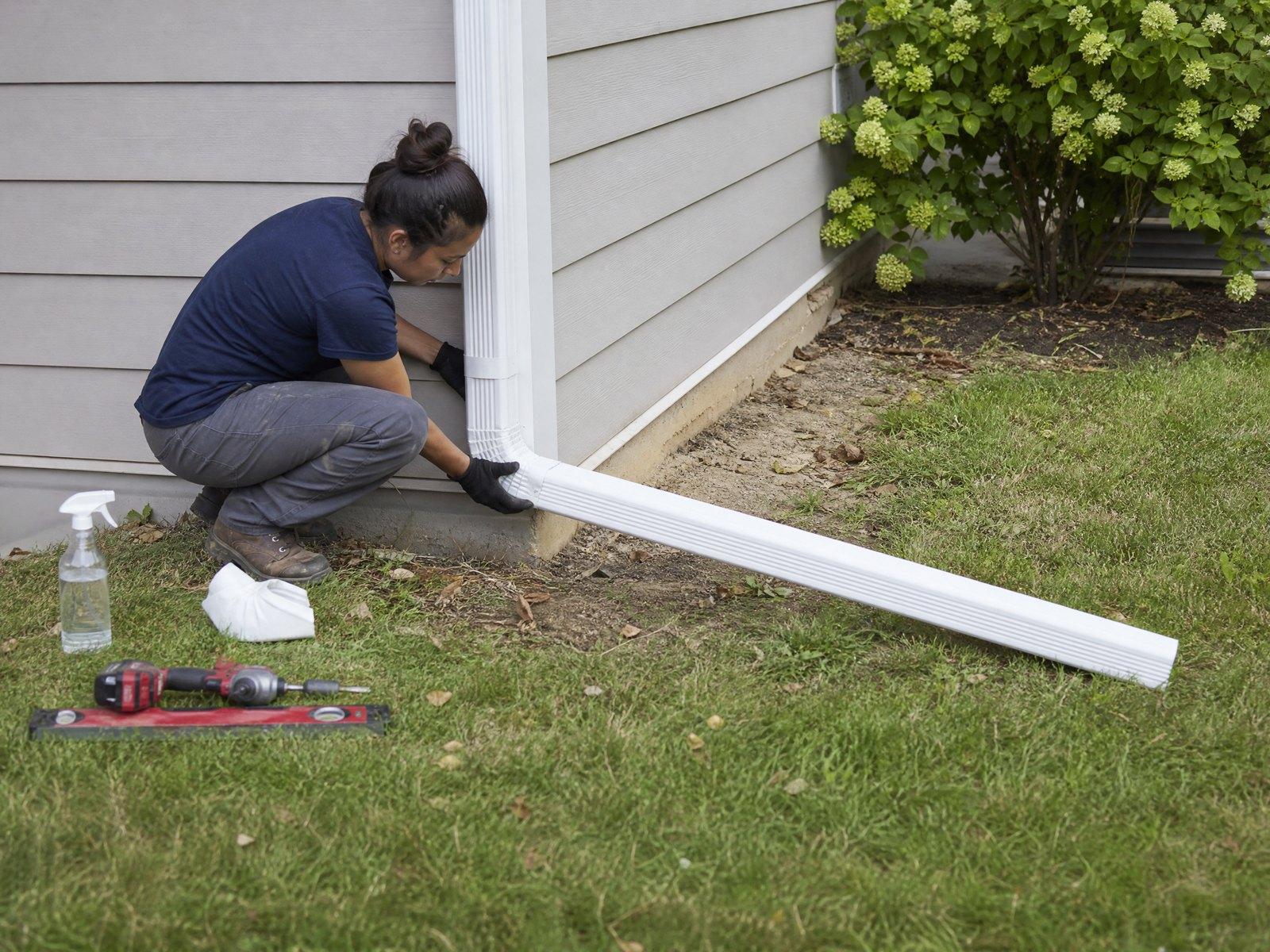
- Fitting elbows, straps and kick-outs at the base
- Attaching hinged or rigid extensions that carry water well clear of the wall
- Installing buried drain lines with a pop-up emitter or connection to an approved outlet
- Replacing crushed, dented or detached sections
- Checking the flow with a hose test
Signs the downspouts need attention
Pools of water or eroded soil next to the foundation after rain
Gutters overflow even though they are clean and sloped correctly
Downspouts stay dry during a storm because they are clogged at the top
Pipes are dented, pulled off the wall or missing their elbows
Splash marks, mud streaks or algae growth on the siding where water hits the ground
The basement or crawl space turns damp near a corner where a downspout ends
How the work goes, step by step
Describe the problem
Mention where water collects, whether gutters overflow, and which corners get damp.
Trace the water
A local specialist checks each downspout, the grade near the house and any obstacles for a discharge route.
Pick the fix
Bigger pipe, extra outlets, surface extensions or a buried line are suggested for each corner.
Written quote
The quote lists each downspout, its size, where it ends and what is installed there.
Install and test
Pipes and extensions go in, and the flow is tested before the crew leaves.
What changes the price
- Number of downspouts
- Each pipe carries its own parts and labour, so extra outlets add up.
- Pipe size
- Larger 3x4 pipes cost more than the 2x3 standard.
- Length of extension
- A few feet of hinged extender costs far less than a long buried run.
- Buried drains
- Trenching, pipe, fittings and the outlet all add to the total, and hard ground or tree roots slow digging.
- Obstacles
- Walkways, patios, driveways and neighbouring lots limit where water can go.
- Material
- Aluminum, steel and copper pipes are priced differently.
What a good quote spells out
- Where each downspout will discharge and how far from the wall
- The size of the pipes, and whether the run needs an extra outlet
- Whether extensions are fixed, hinged or buried, and what happens at the exit point
- Who checks local rules if the discharge reaches a street, storm sewer or neighbouring property
- Warranty terms, in writing
Downspouts & Extensions: questions people ask
How far should a downspout discharge from the house?
As far as the lot allows, commonly several feet or more, onto ground that slopes away. The goal is that the water never flows back toward the foundation.
Is 3x4 better than 2x3?
It carries significantly more water, so it suits large roofs, steep pitches and areas with heavy rain. A smaller roof with short runs can be fine with 2x3.
Can downspouts be connected to the city sewer?
Rules vary by municipality, and some prohibit it. Check local requirements, and let the quote say what connection is planned.
What is a buried downspout line?
A solid pipe buried in a trench carries water from the base of the downspout to a distant outlet or a drywell. It keeps the yard clear and the discharge away from the walls.
Will extensions get in the way of mowing?
Hinged extensions fold up out of the way and drop down when it rains. Buried lines leave nothing on the surface except a small outlet.
Other Torrent services
Overflowing, Leaking or Sagging? Get It Looked At.
Fill out the quote form with your city and what you are seeing. A local specialist follows up to look at the roofline and give you a written quote. Free to request, no obligation.
Request a free quote →